
Planets, moons and stars
Start on Earth. End up past Pluto.
A calm puzzle app for kids aged 3 to 13. Drag each planet, moon and spacecraft to its place, hear its name, and learn the little story that makes it stick.
Every space map is free. Try every extra free for 7 days. No ads, no accounts, works offline.
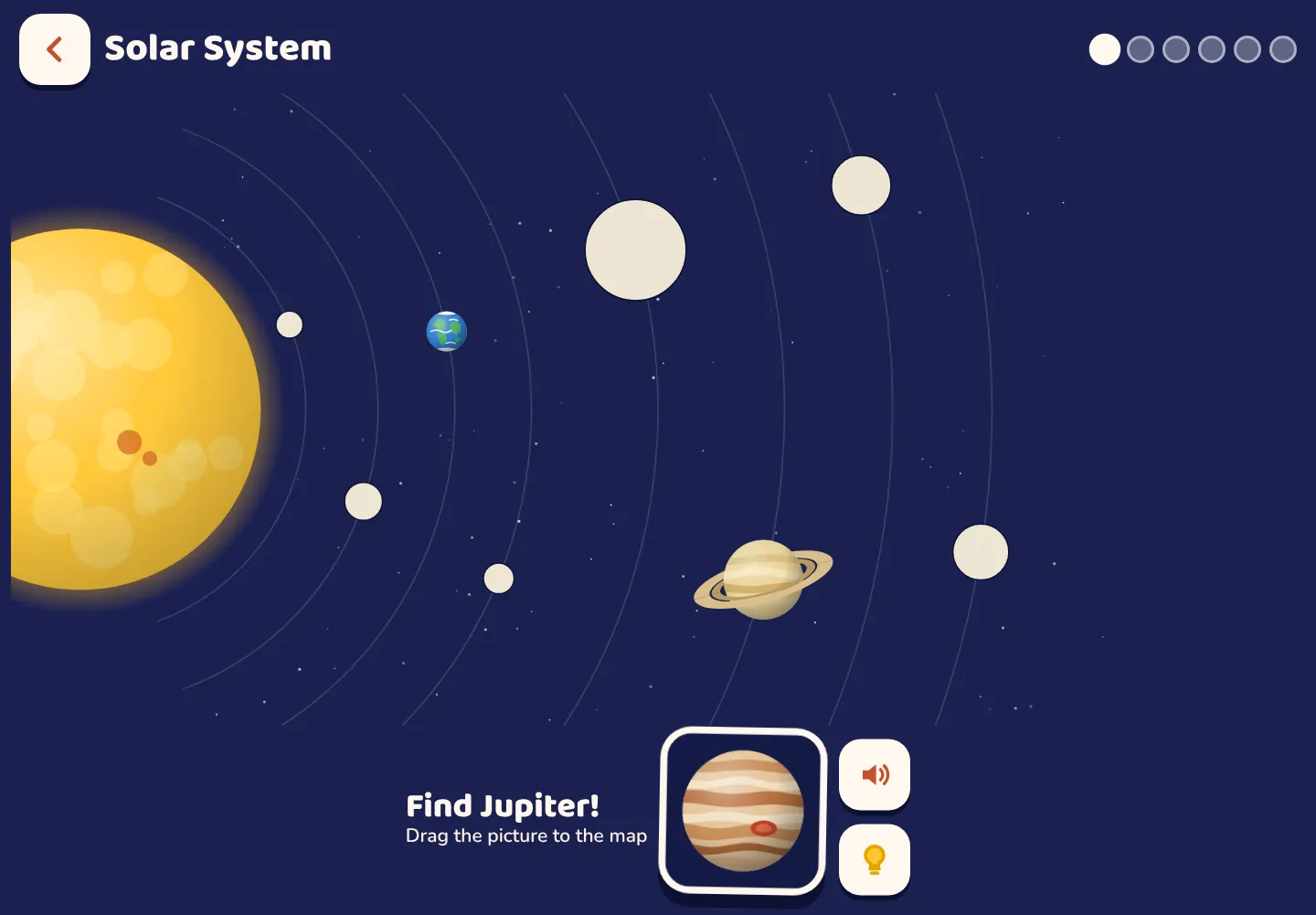
The space maps are free. All of them.
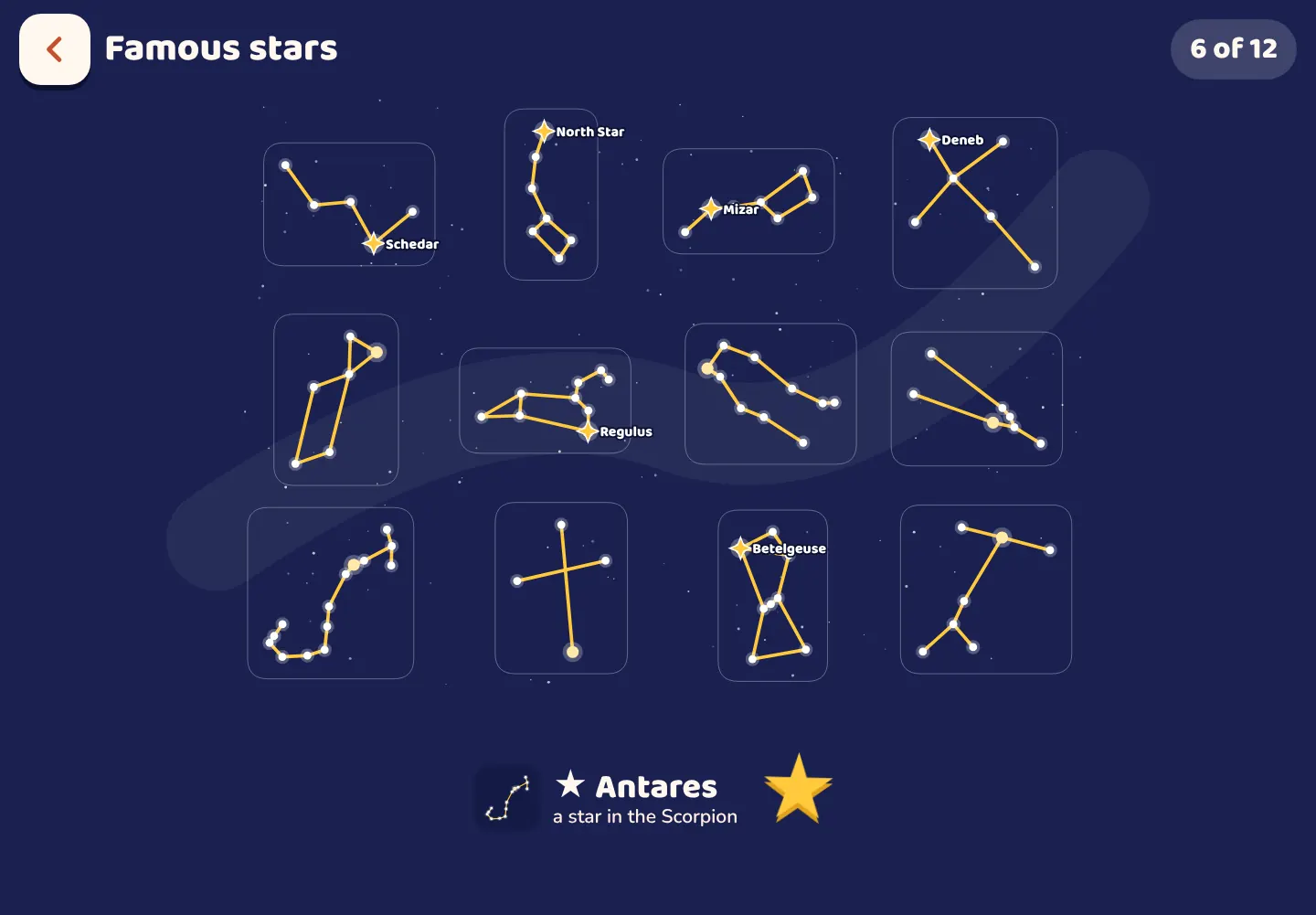
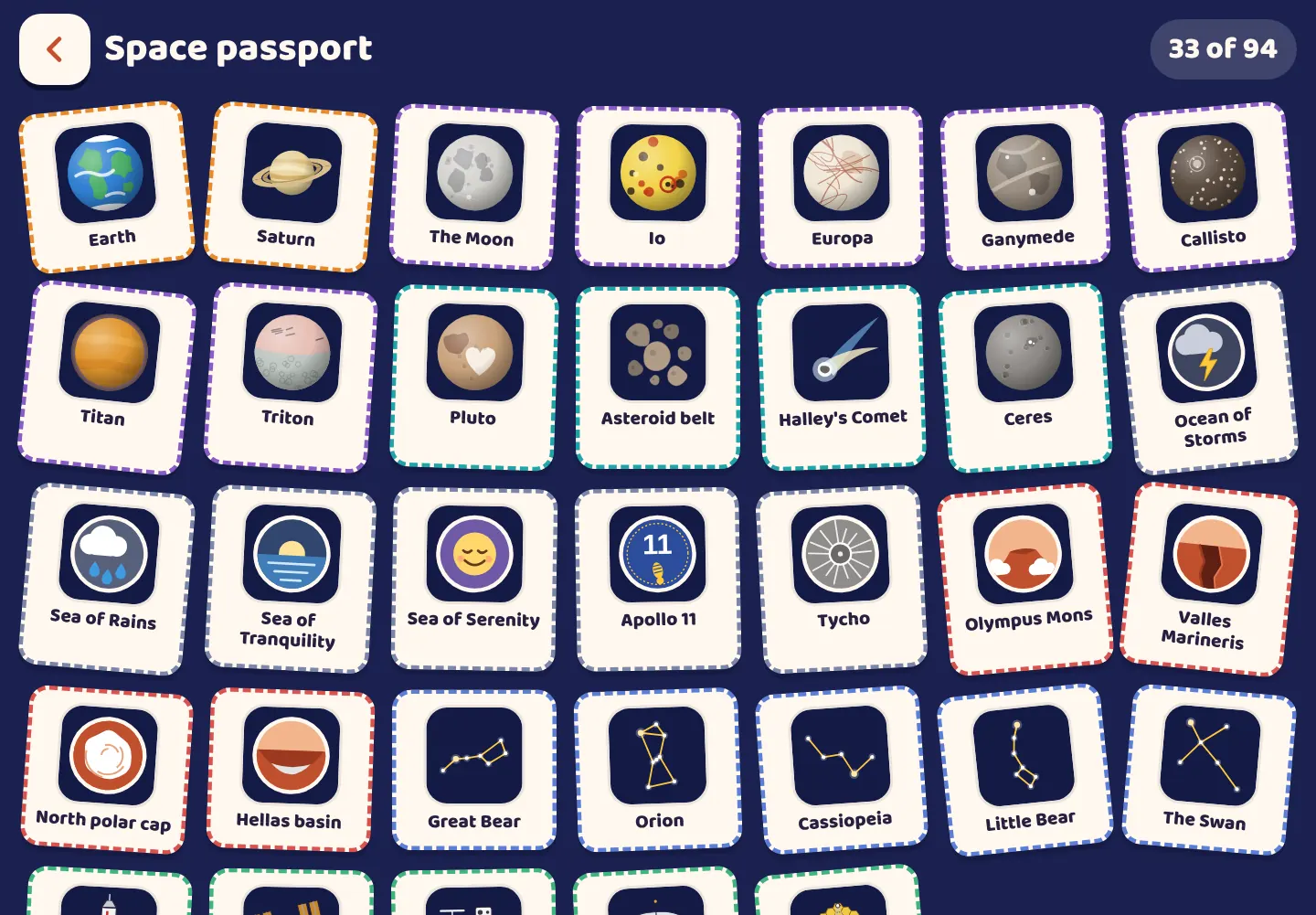
94 planets, moons, Moon seas, Mars places, star patterns and spacecraft on seven maps. Not a taster that stops after round one: every map, free for good.
 Solar System
 Moons
Moons Small worlds
 The Moon
 Mars
Mars Constellations
 Spacecraft
- Pick a mapThe most famous things come first, so round one always feels doable.
- Drag it to its placeThe name is said out loud, so kids who can't read yet can play on their own.
- Missed? Hear the storyA wrong drop is never a fail. Space Wiki says what that was, then tells the story of the right one.
Eight planets, eight stories
Every planet, moon and spacecraft comes with one short, true story, written for kids and checked against NASA's facts.

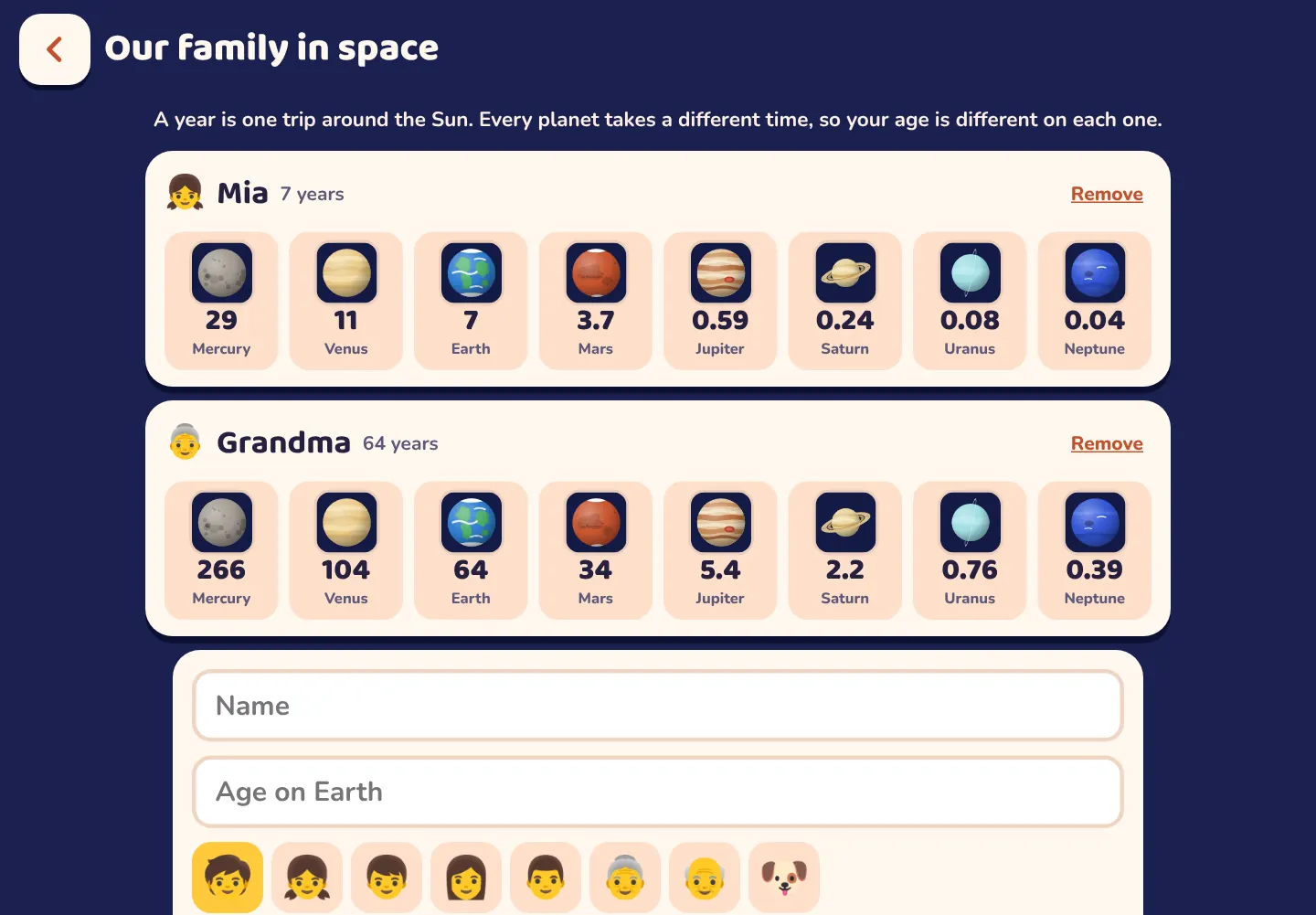
 MercuryThe smallest planet and the closest to the Sun. A year here lasts only 88 days.
 VenusThe hottest planet of all, wrapped in thick yellow clouds. It spins backwards, so the Sun rises in the west.
 EarthOur home. The only place we know that has life, and most of it is covered by oceans.MarsThe red planet. Its red colour is rust in the dust, and it has the tallest volcano we know.
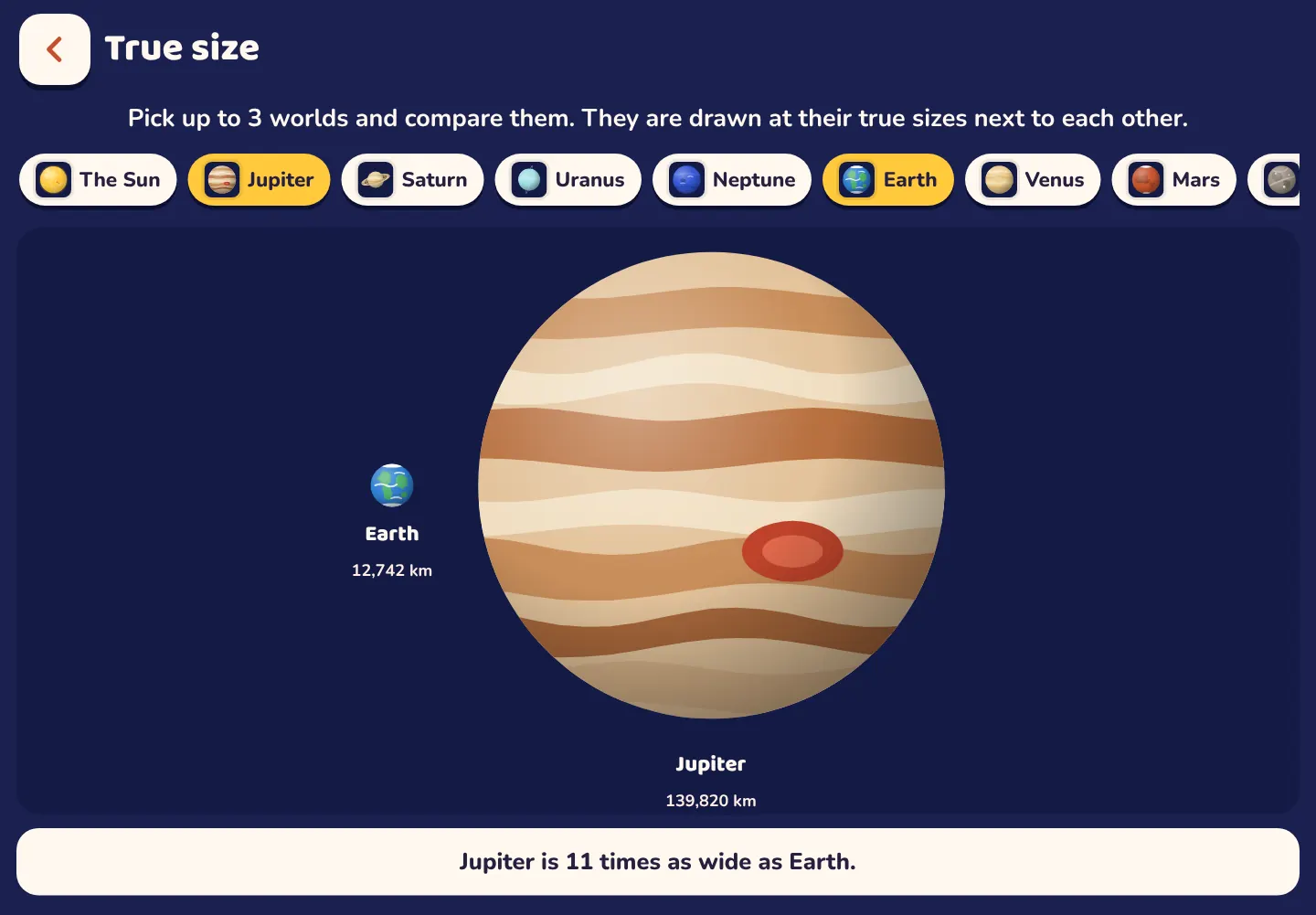
 JupiterThe biggest planet. Its Great Red Spot is a storm wider than Earth that has blown for more than 150 years.SaturnThe planet with the great rings. They are made of billions of pieces of ice and rock.
 UranusIt rolls around the Sun tipped over on its side, like a ball.
 NeptuneThe farthest planet, deep blue and very cold. It has the fastest winds in the solar system.
Space Wiki Pro: 20 extras
When the maps are full, space gets bigger. One payment opens all twenty, plus everything we add later. Try them all free for 7 days first.
€9.99, paid onceExplore deeper
Play & quiz
Family & calm
Why an app, and why this one
Kids learn by doing
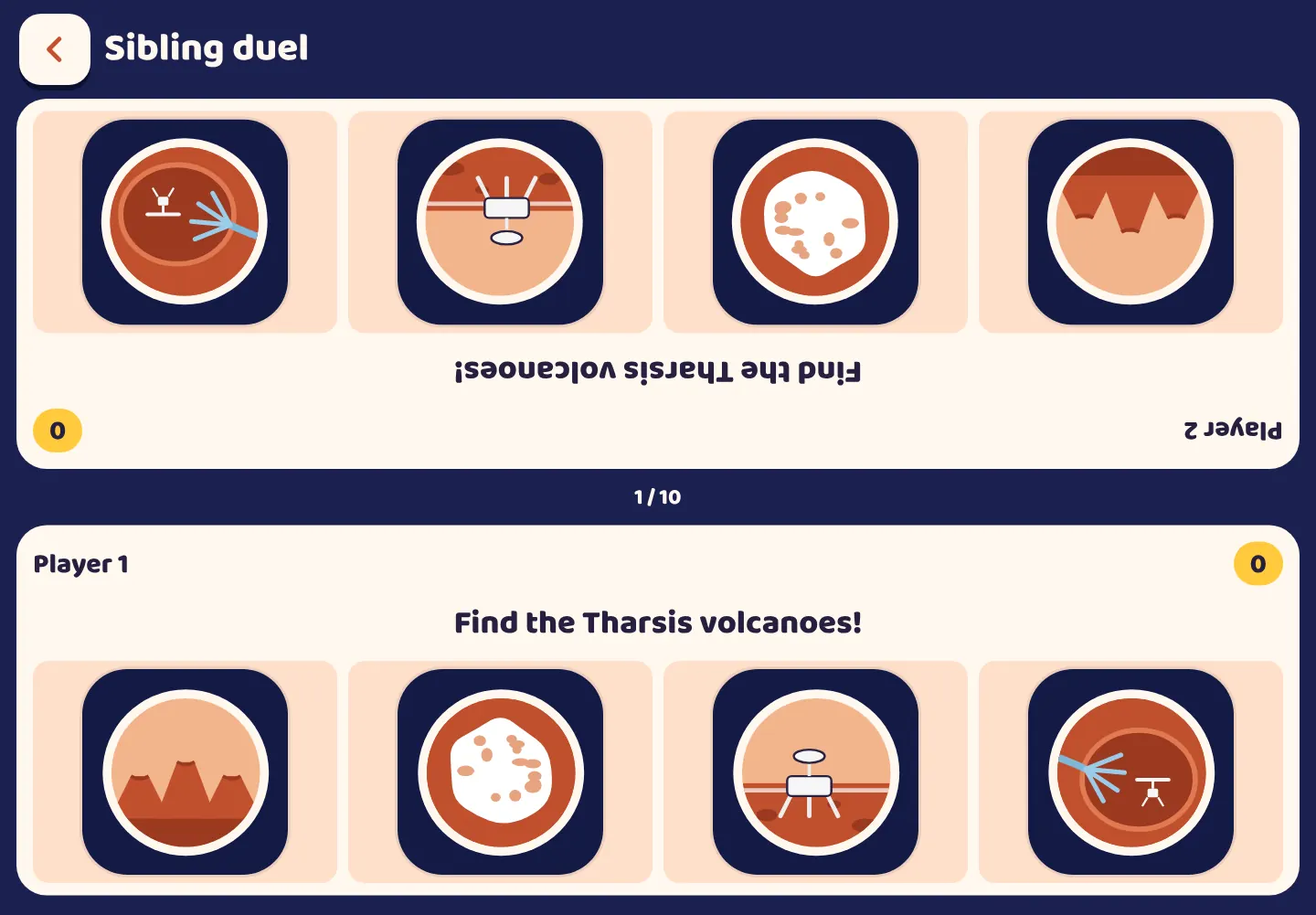
Every drag is a small memory test: find it, place it, see if it was right. Pulling an answer out of your own head is called retrieval practice, and it beats reading the same thing again, also with kids in real primary school classes.1
Pictures stay, words slip
Every world comes with a tiny story kids can see in their head. People remember pictures far better than plain words, so a picture-story sticks where a list of facts doesn't.2
No ads, ever
A University of Michigan study found ads in 95% of 135 popular apps for children aged 5 and under. Space Wiki has none, and no tricks to keep kids hooked.3
Facts that hold up
Sizes, distances and years come from NASA's planetary fact sheets. Space keeps surprising us, so when scientists find something new, we update it.4
Calm enough for a 3 year old. Hard enough for a 13 year old.
Made for kids who learn in their own way, including kids with ADHD.
- Retrieval practice in primary schools: PMC12372469
- Pictures and dual coding (Paivio): The Learning Scientists
- Advertising in kids' apps, Meyer et al.: Michigan Medicine
- NASA planetary fact sheets: NASA NSSDCA
Get Space Wiki
Free to play. Pro is €9.99, once, after a 7-day free trial.
- Free: all seven space maps with 94 things to find
- Pro: all 20 extras and everything we add later
- No subscription, no ads, nothing else to buy
For grown-ups
- No ads and no tracking. Ever.
- No accounts. A kid profile is just a first name, kept on your own device.
- A grown-up check comes first, so kids never see legal text or a buy button.
- Works offline. In the car, on a plane, at grandma's.
- Short, true space stories written for kids, with nothing scary in them.